
Understanding the Science of Airflow in a Pneumatic Conveying Line
Modern industries depend heavily on precise and efficient material handling systems to transport powders and granules safely. Among these technologies, the pneumatic conveying line plays a crucial role in ensuring that materials move smoothly and cleanly across different stages of production. Whether it is in food processing, pharmaceuticals, plastics, or chemicals, understanding how airflow works inside a pneumatic conveying line helps engineers achieve better performance, efficiency, and product quality.
Rajath Material Handling Systems Pvt Ltd has been engineering innovative pneumatic conveying systems that balance air pressure, velocity, and flow dynamics for maximum material transfer efficiency. Each system is designed with deep attention to airflow science to reduce losses, minimize dust, and enhance plant productivity.
What Is a Pneumatic Conveying Line
A pneumatic conveying line is a network of pipelines that transport dry bulk materials using air as the carrier medium. Unlike mechanical conveyors that use belts or screws, this method relies on controlled air movement to carry powders or granules through enclosed tubes. The key advantage is that it allows for dust-free, contamination-free, and low-maintenance material transfer over long distances or through complex plant layouts.
The airflow in a pneumatic conveying line determines how efficiently materials travel. The speed, pressure, and direction of the air must be carefully balanced to avoid blockages, excessive wear, or material degradation.
The Role of Airflow in Material Transport
The airflow acts as the driving force inside the conveying line. When air is blown or pulled through the system by a compressor or vacuum pump, it creates a pressure difference that moves the material from one point to another.
The airflow must be strong enough to keep particles suspended but gentle enough to prevent damage to delicate materials.
In Rajath Material’s Pneumatic Conveying Systems, engineers calculate precise airflow parameters such as pressure drop, velocity, and air volume to ensure smooth transfer and uniform product quality.
Types of Pneumatic Conveying Based on Airflow
1. Dilute Phase Conveying
This type uses high-velocity airflow to suspend and transport particles through the line. It is ideal for materials that are light and non-abrasive, such as flour, starch, or plastic pellets.
The advantage of dilute phase conveying is that it allows continuous flow and can cover long distances with flexible routing.
2. Dense Phase Conveying
Dense phase conveying uses low-velocity and high-pressure airflow to push materials in a slower, denser form. It is best suited for fragile or abrasive materials like cement, sugar, or fine chemicals.
Because the materials move in slugs or plugs, there is less wear on the pipeline and minimal product degradation.
Rajath Material Handling Systems Pvt Ltd designs both dilute and dense phase systems based on the specific nature of the product and plant requirements.
Airflow Balance and System Efficiency
The key to an efficient pneumatic conveying line is achieving the right airflow balance. Too much air velocity can cause pipeline abrasion and energy waste, while too little can result in blockages and uneven flow.
By using air control valves, flow meters, and pressure sensors, Rajath Material’s systems maintain optimal airflow for every product type. This not only ensures efficient conveying but also reduces energy consumption and operating costs.
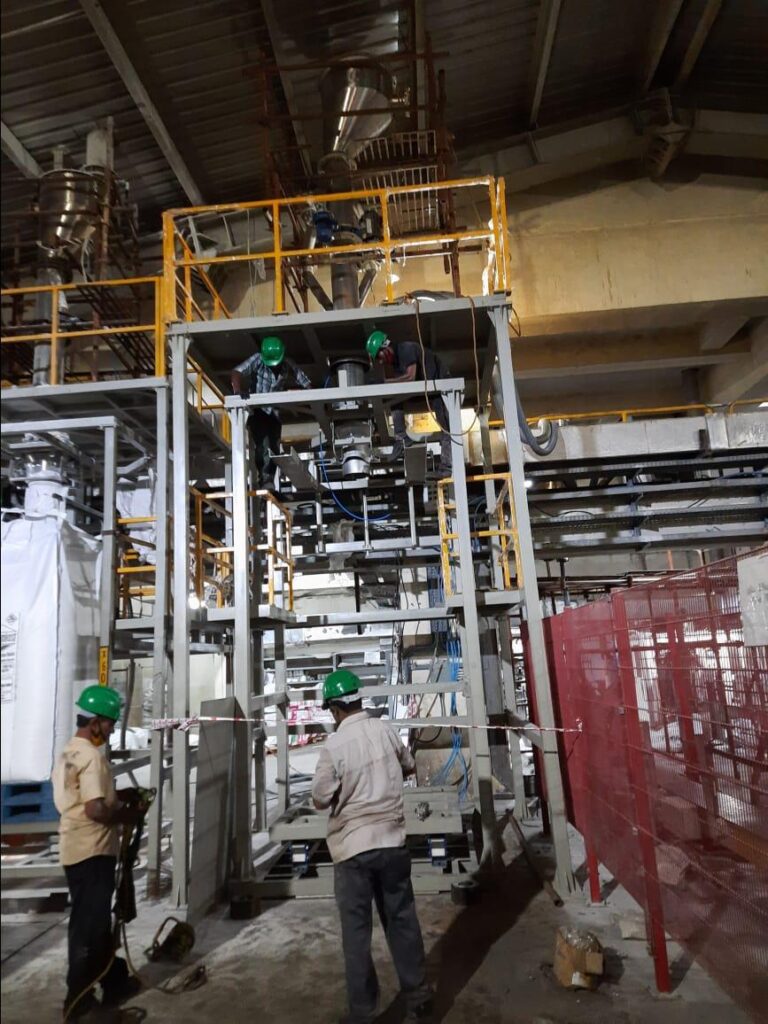
Design Factors That Affect Airflow
The design of a pneumatic conveying line directly impacts how air behaves inside it.
Some of the main factors include:
- Pipeline Diameter and Length: Affects air velocity and pressure drop across the system.
- Material Density and Particle Size: Determines the airflow needed to keep particles in suspension.
- Bends and Elbows in the Line: Sharp turns increase resistance and pressure loss.
- Feed Rate and Air Supply Pressure: Must be synchronized for consistent flow.
Rajath Material engineers analyze these parameters carefully during design to build systems that achieve both accuracy and longevity.
Maintaining a Clean and Safe Conveying Line
In industries like food and pharmaceuticals, maintaining hygiene and preventing contamination are top priorities.
The enclosed design of pneumatic conveying lines eliminates material spillage and protects the product from external contaminants. Rajath Material also integrates dust extraction units and smooth pipeline interiors to prevent buildup and ensure easy cleaning. This helps companies meet strict quality and safety regulations effortlessly.
Why Airflow Science Matters
The science behind airflow is not just about moving materials; it is about controlling energy, pressure, and direction to achieve a consistent and efficient process. Understanding how air behaves inside the pipeline allows industries to fine-tune operations, reduce downtime, and maintain quality.
With decades of experience, Rajath Material Handling Systems Pvt Ltd combines practical engineering with airflow expertise to deliver systems that are energy-efficient, reliable, and built for modern industry demands.
Smarter Conveying Begins with Smarter Airflow
Every successful pneumatic conveying system starts with mastering the science of airflow. By understanding and controlling the relationship between pressure, airspeed, and material characteristics, manufacturers can achieve unmatched accuracy and productivity.
Rajath Material Handling Systems Pvt Ltd continues to lead the way in designing intelligent conveying systems that make material handling cleaner, safer, and more efficient for every industry.
Rajath Material Handling Systems Pvt Ltd – Engineering Smarter Material Handling Solutions for Modern Industries.