
The Reality of High Demand Industrial Operations
High demand industrial operations run under constant pressure to deliver output without interruption Production targets are aggressive material movement is continuous and workforces operate at full pace In such conditions maintaining safety and cleanliness becomes more challenging but also more critical Small lapses can quickly turn into accidents downtime equipment damage or compliance issues Successful industrial operations treat safety and cleanliness as core operational controls not secondary tasks
Why Safety and Cleanliness Matter More Under High Demand
As demand increases every weakness in operations becomes visible Dust builds faster spills occur more frequently and fatigue affects worker focus Maintaining safety and cleanliness in high demand industrial operations protects workers ensures stable production and prevents minor issues from escalating into costly disruptions Clean and safe environments support reliability which is essential when operations are pushed to their limits
Controlling Material Flow to Reduce Risk
Uncontrolled material flow is a major cause of clutter spills and hazards in high demand environments Maintaining safety and cleanliness starts with predictable and controlled material movement Defined transfer paths enclosed handling and stable feed rates reduce spillage and congestion When material flow is organized work areas remain safer and easier to manage even during peak workloads
Managing Dust in High Demand Conditions
Dust is one of the biggest challenges in high demand industrial operations It affects air quality visibility equipment performance and worker health Maintaining safety and cleanliness requires dust to be controlled at the source Enclosed transfer points sealed discharge zones and proper containment prevent dust from spreading across the facility Effective dust management reduces cleaning time protects equipment and creates healthier working conditions during continuous production
Reducing Manual Handling to Improve Safety
Manual handling becomes more dangerous as production pressure increases Workers rushing to meet targets are more likely to suffer strain injuries or make errors Maintaining safety and cleanliness depends on minimizing manual intervention through automated or assisted material movement Fewer manual touchpoints lead to safer workflows more consistent operations and reduced injury risk across shifts
Layouts That Support Clean and Safe Operations
Facility layout plays a crucial role in high demand environments Clear walkways defined material routes and separation between people machines and materials reduce collision risks and confusion Maintaining safety and cleanliness is easier when layouts are organized easy to navigate and simple to clean Well planned layouts allow operations to remain controlled even when activity levels are high
Preventive Practices Over Reactive Cleanup
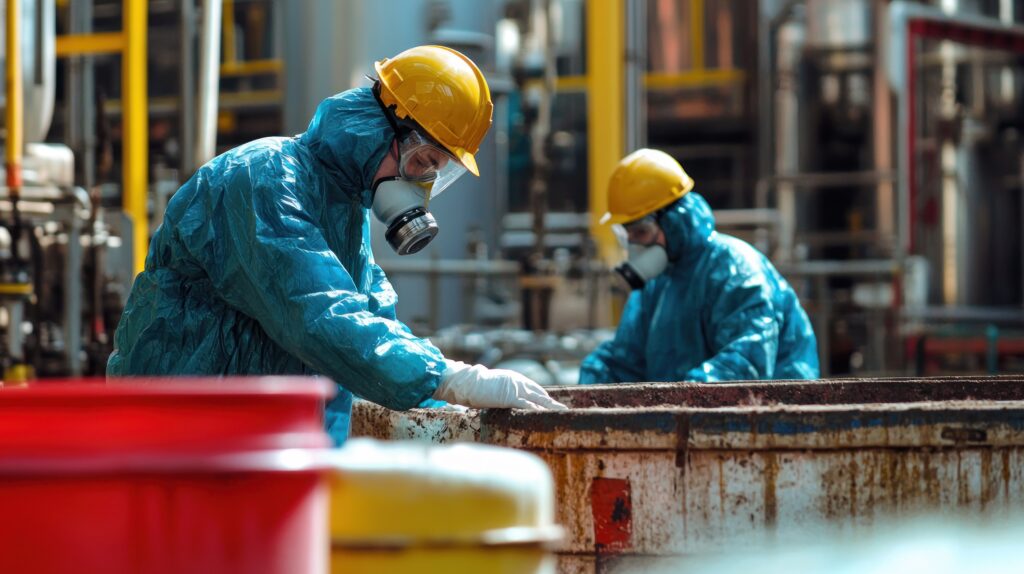
Reactive cleanup disrupts production and increases risk High demand industrial operations rely on preventive practices to maintain safety and cleanliness Spill containment controlled discharge and dust prevention stop issues before they spread Prevention allows facilities to maintain output while keeping standards consistent
Protecting Equipment to Maintain Safe Operations
Dust and spillage accelerate equipment wear and create unsafe maintenance conditions Maintaining safety and cleanliness includes protecting machinery from contamination Cleaner equipment runs more reliably requires fewer emergency repairs and supports safer maintenance activities Equipment stability is critical in high demand operations where unexpected failures can be hazardous
Training and Discipline Under Production Pressure
Systems alone cannot maintain safety and cleanliness Workers must be trained to follow procedures consistently even during busy periods Regular training clear instructions and accountability help teams maintain discipline under pressure High demand industrial operations succeed when safety and cleanliness remain priorities at every level
The Role of Material Handling Design
Material handling design determines how well safety and cleanliness can be sustained under high demand Poorly designed handling creates bottlenecks dust and congestion Well engineered systems support continuous flow without loss of control Maintaining safety and cleanliness depends on designs that balance throughput with containment stability and worker protection
How Rajath Material Handling Systems Pvt Ltd Supports High Demand Operations
Maintaining safety and cleanliness in high demand industrial operations requires practical engineering expertise Rajath Material Handling Systems Pvt Ltd designs material handling solutions that reduce dust minimize manual handling and support stable workflows under heavy production loads Each solution is tailored to material characteristics plant layout and output requirements helping operations maintain safety cleanliness and efficiency without slowing production
Long Term Benefits of Safe and Clean High Demand Operations
Operations that prioritize safety and cleanliness under high demand experience fewer accidents lower maintenance costs improved worker morale and consistent output Clean environments protect product quality and extend equipment life Safety focused operations also simplify compliance and reduce downtime These benefits strengthen performance even as demand continues to grow
Sustaining Standards as Demand Increases
As industrial demand rises maintaining standards requires continuous attention Regular inspections preventive maintenance and process reviews help sustain safety and cleanliness High demand operations remain stable when systems people and processes evolve together without shortcuts
Conclusion Safety and Cleanliness Enable High Demand Performance
Maintaining safety and cleanliness in high demand industrial operations depends on controlled material flow effective dust management reduced manual handling organized layouts and preventive practices With expert support from Rajath Material Handling Systems Pvt Ltd industrial operations can meet high demand without compromising worker safety cleanliness or reliability Safety and cleanliness are the foundations that allow high demand operations to perform consistently day after day