
Why efficient movement of powders supports better plant performance
Industrial plants depend on consistent material movement to maintain output. When powders and granules travel smoothly, machines work with less strain and less power consumption. Transfers become predictable and operators handle fewer interruptions. A well designed pneumatic conveying setup helps plants achieve this level of efficiency because the entire process uses controlled airflow instead of heavy mechanical force. This reduces unnecessary load on motors, lowers friction, and creates a cleaner handling environment. Many industries now rely on engineered solutions from Rajath Material Handling Systems Pvt Ltd because they design pneumatic conveying lines that move material with low energy use while maintaining high productivity.
A plant becomes energy smart when all stages work in harmony. Conveying is one of the most energy consuming segments if handled poorly. When equipment relies heavily on belts, buckets, or manual feeding, energy demand increases naturally due to constant mechanical movement. A structured pneumatic conveying system reduces these demands by removing most mechanical contact and relying on airflow to transport material efficiently.
How airflow based transport lowers mechanical load
Mechanical conveying depends on continuous movement of belts, chains, rollers, or buckets. Every component creates friction, and friction requires energy. The more contact the system has, the more power it consumes. Pneumatic conveying uses compressed air or vacuum flow to move material without direct surface friction. This helps the plant save energy while maintaining stable movement.
Systems designed by Rajath Material Handling Systems Pvt Ltd use calculated airflow that matches material density, pipeline length, and required transfer rate. By balancing these elements, the system minimizes energy spikes and avoids unnecessary power draw during operation.
Why consistent material flow reduces energy waste
Energy waste occurs when machines must start and stop repeatedly. When material arrives unpredictably, downstream units slow down or wait for feeding to catch up. During these idle periods, the machines still consume power without producing output. A stable pneumatic conveying line maintains consistent feeding so the plant does not experience these inefficient pauses.
Rajath Material Handling Systems Pvt Ltd builds systems that reduce flow interruptions. Their designs ensure powder moves continuously at a predictable rate. This keeps the entire line active and prevents the waste that comes with unstable material supply.
Cleaner operation supports energy efficiency
Dust and spillage affect airflow and machine performance. When dust escapes into the environment, it settles on equipment and increases the effort required to maintain hygienic conditions. Cleaning activities use time and power, and repeated clearing disrupts the flow of operations. Pneumatic conveying keeps material inside sealed pipelines, which reduces dust release and supports cleaner movement.
Systems from Rajath Material Handling Systems Pvt Ltd use enclosed designs that maintain internal air quality. When the pipeline remains clean, airflow stays stable, which lowers the energy needed to maintain conveying pressure. This results in smoother long term operation.
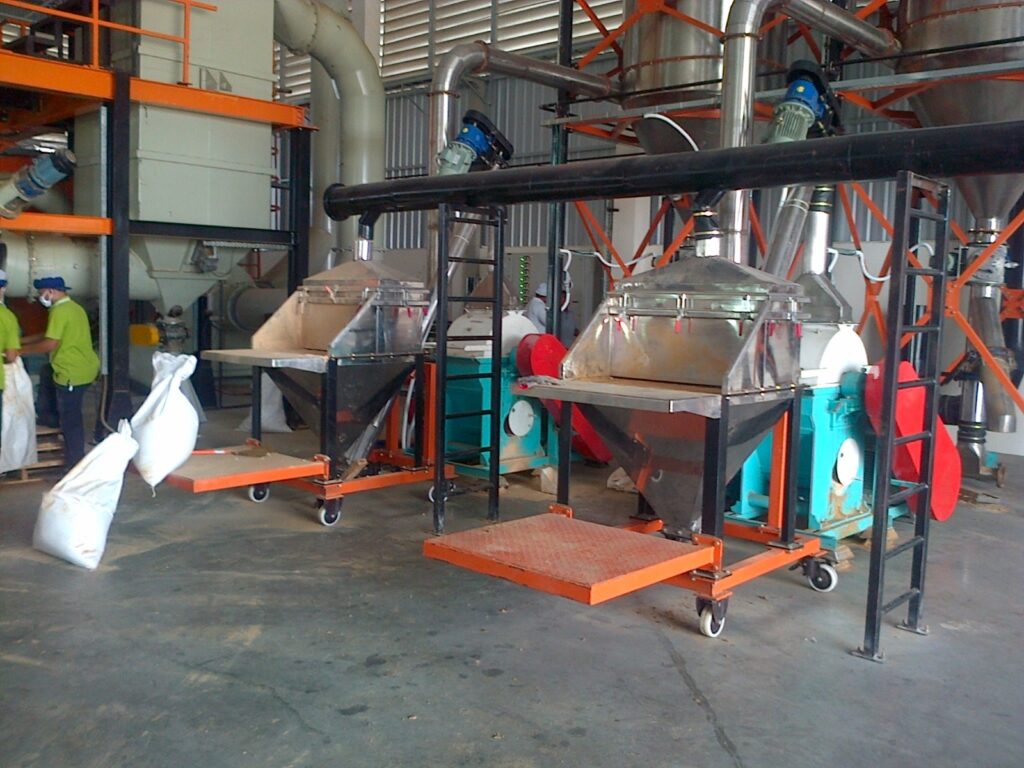
Reduced wear leads to less energy loss
When internal surfaces wear down, systems require more pressure or speed to maintain the same conveying rate. This increases power consumption. Pneumatic conveying reduces wear because particles move in controlled airflow with minimal mechanical contact. Low wear means stable performance and fewer increases in energy demand over time.
Rajath Material Handling Systems Pvt Ltd selects pipeline materials and system components that withstand constant use. Their engineering approach prevents unnecessary friction, which helps maintain consistent energy consumption throughout the system’s life.
How pneumatic conveying supports long distance transfer with less power
Moving materials across long distances using mechanical methods requires multiple motors, rollers, and support structures. Each section consumes power and requires supervision. A well designed pneumatic conveying line can transport powders across floors and between levels using a single controlled airflow source. This reduces the total number of energy consuming units in the plant.
The engineering team at Rajath Material Handling Systems Pvt Ltd studies layout geometry and material characteristics to design pipelines that take the shortest, cleanest path. This reduces pressure loss and keeps energy use low at long distances.
Fewer moving parts mean fewer breakdowns
Mechanical equipment with many moving parts often fails at points of contact. These failures require shutdowns, which disrupt production and waste power during idle time. Pneumatic conveying includes fewer mechanical parts, which reduces friction and prevents sudden failures. With less mechanical action, plants experience smooth operation and minimal downtime.
By installing carefully engineered systems, Rajath Material Handling Systems Pvt Ltd helps industries maintain high uptime without extra energy wasted on start stop cycles.
Better control of airflow prevents overuse of power
Airflow balance is essential for energy smart operation. Too much pressure wastes power. Too little pressure slows movement. Precise control keeps the system efficient. Pneumatic conveying systems with controlled airflow achieve the right balance without unnecessary force.
Rajath Material Handling Systems Pvt Ltd uses calibrated blowers, smart airflow paths, and stable pressure control to keep conveying rates high while energy demand stays low. Their systems help plants maintain smooth flow without overdriving motors.
Why pneumatic conveying strengthens long term energy savings
Energy efficiency is not a one time achievement. Plants need systems that reduce energy use year after year. A well executed pneumatic conveying setup provides long term savings because it maintains stable performance, uses fewer moving parts, and reduces losses caused by dust, friction, and inconsistent flow. With proper design and airflow management, the plant experiences lower energy bills and fewer operational delays.
Industries partner with Rajath Material Handling Systems Pvt Ltd because they understand how airflow, pressure, velocity, and material behavior affect energy use. Their systems deliver long term stability, reduced power consumption, and high throughput.
A smart solution that improves material movement and energy use
A plant that wants high efficiency must focus on how powders move. With pneumatic conveying, industries achieve cleaner handling, lower energy demand, better feeding accuracy, and stronger equipment life. The systems provided by Rajath Material Handling Systems Pvt Ltd help plants adopt an energy smart approach to material transfer. This ensures a smoother workflow, reduced costs, and a more efficient production environment.