
In many manufacturing industries, handling bulk materials efficiently is a critical part of the production process. Materials such as powders, granules, and pellets must be transported safely and quickly between different stages of production. Traditional conveying methods like belt conveyors or screw conveyors have been widely used, but they often come with limitations such as space requirements, dust leakage, and maintenance challenges.
This is where pneumatic conveying systems offer a modern and efficient solution. By using air pressure or vacuum to move materials through enclosed pipelines, pneumatic conveying systems provide a clean, flexible, and reliable way to handle bulk materials in industrial environments.
In this article, we explore the key advantages of pneumatic conveying systems and why they are widely used in industries such as food processing, pharmaceuticals, chemicals, and plastics.
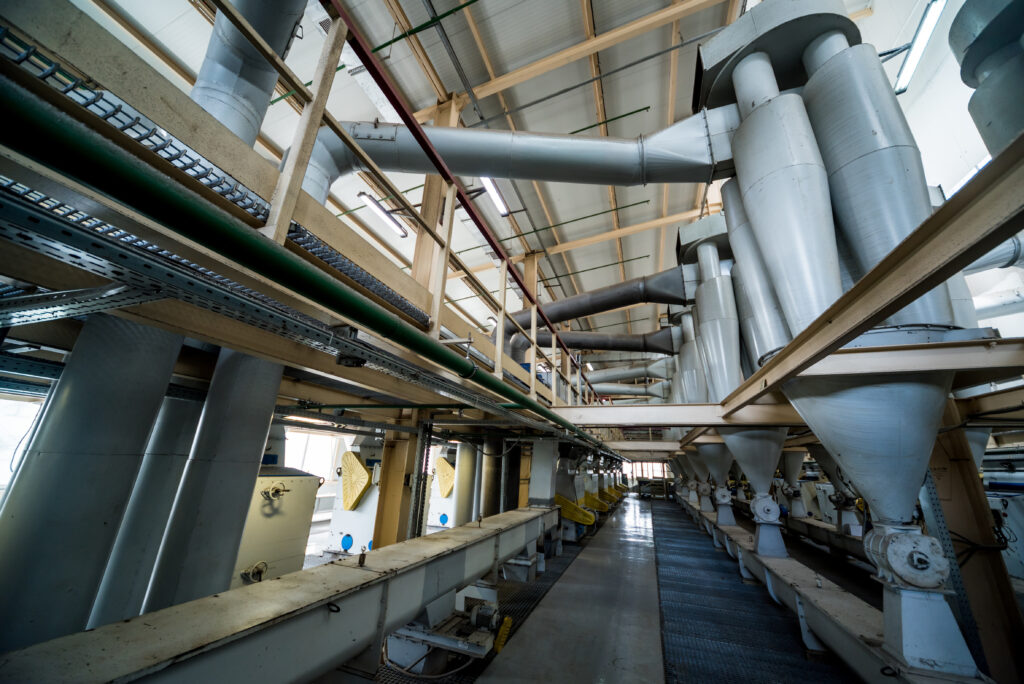
Efficient Long-Distance Material Transport
One of the biggest advantages of pneumatic conveying systems is their ability to transport materials over long distances. Unlike many mechanical conveyors that are limited by their design, pneumatic systems can move materials both horizontally and vertically.
This capability allows manufacturers to transport powders and granules across different sections of a plant, between floors, or even across large facilities without complicated conveyor setups. As a result, production processes become more efficient and streamlined.
Space-Saving System Design
Manufacturing plants often operate in environments where space is limited. Installing large mechanical conveyors can occupy valuable floor space and restrict plant layout.
Pneumatic conveying systems use compact pipelines instead of bulky mechanical equipment. Because of this, they require much less floor space and can easily fit into existing facilities without major structural changes. This compact design makes them a practical solution for both new plants and existing manufacturing units looking to upgrade their material handling systems.
Flexible Routing Around Equipment
Another important benefit of pneumatic conveying systems is their flexibility in routing. The pipeline design allows materials to be transported around existing machinery, walls, or other obstacles within the plant.
This flexibility means that industries can install pneumatic conveying systems without disrupting their current production setup. The pipes can run horizontally, vertically, or even around corners, making them suitable for complex plant layouts where mechanical conveyors may not be practical.
Dust-Free and Contamination-Free Operation
Industries that handle powders and fine particles often face challenges related to dust generation and contamination. Open conveyor systems may allow dust to escape into the workplace, creating health risks for workers and affecting product quality.
Pneumatic conveying systems solve this problem through their enclosed design. Materials move through sealed pipelines, preventing dust from escaping into the surrounding environment. At the same time, the enclosed system ensures that external contaminants cannot enter the pipeline. This makes pneumatic conveying ideal for industries that require strict hygiene and cleanliness standards.
Controlled Material Handling Environment
Pneumatic conveying systems allow operators to maintain a consistently controlled atmosphere during material transfer. Airflow, pressure, and velocity can be precisely regulated to ensure smooth and consistent movement of materials.
This level of control is particularly important in industries where delicate powders or sensitive materials must be handled carefully. By maintaining stable conveying conditions, manufacturers can improve product quality and reduce material loss.
Multiple Pickup and Discharge Points
A major advantage of pneumatic conveying systems is their ability to support multiple pickup and discharge points. Materials can be collected from different locations and delivered to various destinations within the plant using a single system.
This flexibility allows manufacturers to connect several processing stages through one efficient conveying network. As a result, material flow becomes smoother, and plant operations become more integrated.
Low Maintenance Requirements
Compared to mechanical conveyors, pneumatic conveying systems typically have fewer moving parts. Mechanical systems often include belts, chains, rollers, and other components that require regular maintenance.
In contrast, pneumatic systems mainly rely on blowers, pipelines, and filtration units. With fewer mechanical components involved, the risk of mechanical failure is reduced. This leads to lower maintenance costs and improved operational reliability.
Improved Workplace Safety
Dust accumulation and airborne particles can pose safety hazards in industrial facilities. Certain types of dust can even lead to fire or explosion risks in extreme cases.
By containing materials within enclosed pipelines, pneumatic conveying systems help reduce dust exposure and create a cleaner working environment. This not only protects employees but also helps companies meet industrial safety regulations.
Conclusion
Pneumatic conveying systems have become an essential part of modern industrial material handling. Their ability to transport materials over long distances, save space, maintain dust-free operations, and provide flexible plant layouts makes them a preferred choice for many industries.
With advantages such as lower maintenance, improved safety, and controlled material handling, pneumatic conveying systems offer a reliable and efficient solution for handling powders and granules in manufacturing plants.
As industries continue to focus on automation, cleanliness, and operational efficiency, pneumatic conveying technology will play an increasingly important role in optimizing bulk material handling processes.